

Tracking SEO performance might sound like a maze of numbers and jargon, but it can make or break a website’s success. Many people think rankings are the only thing that matter. The truth is, over 53 percent of all tracked website traffic comes from organic search, so ignoring engagement and conversions can quietly drain your impact. Choosing what you track and how often can flip your entire strategy, and some of the data that looks impressive on paper might be hiding much bigger opportunities right under your nose.
Table of Contents
- Essential SEO Metrics To Track
- Best Tools For Monitoring SEO Performance
- Interpreting SEO Data For Actionable Insights
- Tips To Improve Ongoing SEO Monitoring
Quick Summary
| Takeaway | Explanation |
|---|---|
| Track key SEO metrics regularly | Focus on organic traffic, conversion rates, and user engagement to measure SEO success. |
| Utilize advanced SEO tools | Leverage tools like Google Analytics and SEMrush for comprehensive insights on performance tracking. |
| Implement systematic monitoring routines | Establish weekly and monthly reviews to identify performance issues and adjust strategies accordingly. |
| Interpret data contextually | Analyze metrics in relation to each other and industry benchmarks to uncover actionable insights. |
| Leverage automation for efficiency | Use automated alerts and dashboards for streamlined monitoring and timely data analysis. |
Essential SEO Metrics to Track
Monitoring SEO performance requires tracking a comprehensive set of metrics that provide insights into your website’s search engine visibility, user engagement, and overall digital marketing effectiveness. Understanding these key performance indicators helps you make data driven decisions and continuously improve your online presence.
Key Performance Indicators for SEO Success
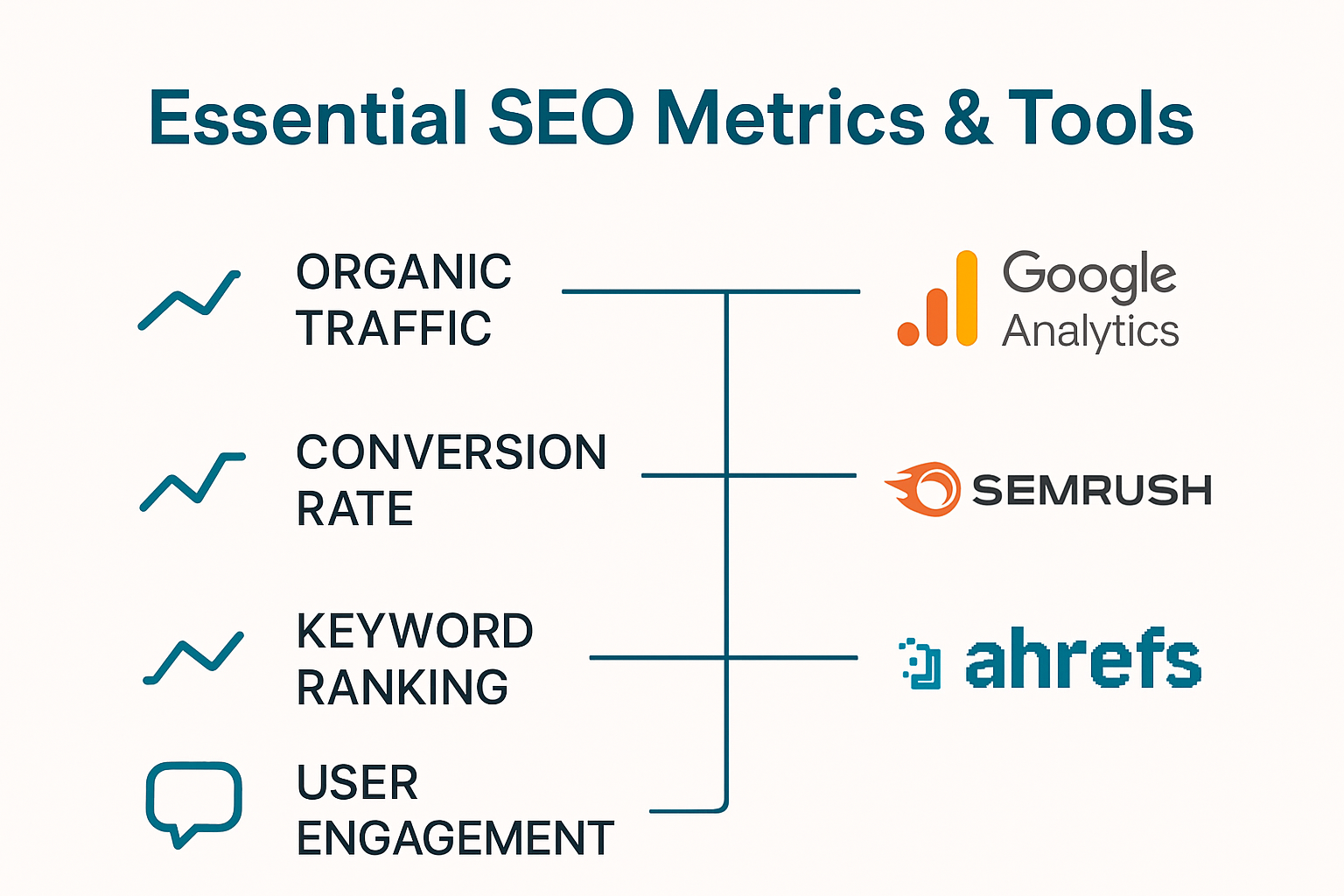
Trackable SEO metrics go far beyond simple ranking positions. Digital marketing experts recommend focusing on metrics that demonstrate real business impact and search engine performance. The most critical metrics include organic traffic, conversion rates, keyword rankings, and user engagement signals.
Organic Traffic Metrics
Organic traffic represents visitors who arrive at your website through unpaid search engine results. Google Analytics research reveals that tracking organic traffic provides crucial insights into your SEO strategy’s effectiveness. Key organic traffic metrics include:
- Total Organic Visits: Measures the number of visitors arriving through search engines
- Traffic by Landing Page: Identifies which pages attract the most organic search visitors
- Organic Traffic Growth Rate: Shows the percentage increase in search generated visitors over time
Advanced Performance Tracking Metrics
Beyond basic traffic measurements, advanced SEO metrics offer deeper performance understanding. These metrics help you diagnose potential issues and optimize your website’s search engine visibility.
Conversion and Engagement Metrics
Search engine optimization isn’t just about attracting visitors but converting them into customers. Critical conversion metrics include:

- Organic Conversion Rate: Percentage of organic visitors completing desired actions
- Bounce Rate for Organic Traffic: Indicates how quickly visitors leave after arriving from search results
- Average Session Duration: Measures user engagement and content relevance
Implementing a comprehensive tracking strategy involves using tools like Google Search Console and advanced analytics platforms to collect and analyze these metrics systematically. By monitoring these indicators consistently, you can refine your SEO approach, improve website performance, and drive meaningful business results.
Remember that successful SEO is an ongoing process of measurement, analysis, and continuous improvement. Learn more about advanced SEO tracking techniques to stay ahead of your competition and maximize your digital marketing effectiveness.
Best Tools for Monitoring SEO Performance
Effective SEO performance monitoring requires powerful tools that provide comprehensive insights, track key metrics, and help you make data driven decisions. The right combination of tools can transform your SEO strategy from guesswork to precision engineering.
Essential Free and Paid SEO Monitoring Tools
Navigating the world of SEO tools can be overwhelming, but several standout platforms offer exceptional performance tracking capabilities. Google Search Console remains the foundational free tool for webmasters, providing direct insights from the world’s largest search engine. This tool offers critical data about your website’s search performance, including indexing status, search queries, and potential technical issues.
Top Recommended SEO Monitoring Tools
Here is a concise comparison table summarizing the key features and uses of top recommended SEO monitoring tools mentioned in this section:
| Tool | Key Features | Primary Use |
|---|---|---|
| Google Analytics | Tracks website traffic, user behavior, conversions | Website analytics & reporting |
| SEMrush | Keyword tracking, competitive analysis | Comprehensive SEO suite |
| Ahrefs | Backlink analysis, keyword research | Backlink & keyword insights |
| Moz Pro | Site audits, keyword research, rank tracking | Site optimization & tracking |
- Google Analytics: Tracks website traffic, user behavior, and conversion metrics
- SEMrush: Comprehensive SEO suite with keyword tracking and competitive analysis
- Ahrefs: Advanced backlink analysis and keyword research platform
- Moz Pro: Offers site audits, keyword research, and ranking tracking
Advanced Performance Tracking Platforms
Professional SEO monitoring goes beyond basic metrics. Advanced analytics platforms provide deeper insights into website performance and search engine visibility. These tools help diagnose technical issues, track keyword rankings, and understand user engagement patterns.
Key Features of Professional SEO Tools
Professional SEO tools offer multiple dimensions of performance tracking:
- Comprehensive Site Audits: Identify technical SEO issues and optimization opportunities
- Competitive Analysis: Compare your website’s performance against industry competitors
- Real Time Rank Tracking: Monitor keyword positions across different search engines
- Backlink Analysis: Evaluate your website’s domain authority and link profile
Choosing the right tool depends on your specific needs, budget, and technical expertise. Learn more about advanced SEO tracking techniques to maximize your digital marketing strategy.
While tools provide valuable data, successful SEO requires human interpretation and strategic implementation. No single tool can replace a comprehensive understanding of search engine optimization principles and continuous learning. Invest time in understanding these platforms, experiment with different features, and adapt your strategy based on the insights they provide.
Remember that SEO is an ongoing process. Regular monitoring, analysis, and adaptation are key to maintaining and improving your website’s search engine performance. The best tools are those that not only provide data but help you translate that data into actionable strategies.
Interpreting SEO Data for Actionable Insights
Transforming raw SEO data into meaningful strategies requires a systematic approach that goes beyond surface level metrics. The true power of SEO analytics lies not in collecting numbers, but in understanding the story behind those numbers and developing targeted improvements for your digital presence.
Decoding Performance Metrics
Successful data interpretation starts with understanding the context of each metric. Digital analytics experts emphasize that raw data requires careful analysis to extract meaningful insights. This means looking beyond simple ranking positions or traffic numbers and connecting the dots between different performance indicators.
Key Interpretation Strategies
- Correlation Analysis: Examine how different metrics interact and influence each other
- Trend Identification: Track performance changes over time to understand long term patterns
- Contextual Evaluation: Compare your metrics against industry benchmarks and competitors
Advanced Data Analysis Techniques
Professional SEO practitioners use sophisticated techniques to transform data into strategic recommendations. Research from content optimization experts reveals that successful interpretation involves multiple layers of analysis:
Performance Diagnostic Framework
- Traffic Quality Assessment: Evaluate not just volume, but the relevance and engagement of organic visitors
- Conversion Path Analysis: Understand how different content pieces contribute to user journeys
- Keyword Intent Mapping: Align search queries with your content’s actual performance and user expectations
The goal of data interpretation is to create a clear roadmap for improvement. By understanding the nuanced signals within your SEO metrics, you can develop targeted strategies that address specific performance challenges.
For instance, a high bounce rate might indicate misalignment between search intent and content, while fluctuating keyword rankings could suggest the need for more comprehensive content optimization. Each metric tells a part of your website’s performance story.
Learn more about advanced SEO data strategies to refine your approach and unlock your website’s full potential.
Remember that data interpretation is both an art and a science. While tools provide the raw information, human insight transforms those numbers into meaningful strategic decisions. Continuous learning, experimentation, and a willingness to adapt are crucial in turning SEO data into tangible business improvements.
Tips to Improve Ongoing SEO Monitoring
Ongoing SEO monitoring is a dynamic process that requires consistent attention, strategic planning, and adaptive techniques. Successful digital marketers understand that SEO is not a one time setup but a continuous journey of optimization and refinement.
Establishing a Systematic Monitoring Routine
Research on website visibility emphasizes the importance of developing a structured approach to SEO monitoring. Creating a consistent routine helps identify potential issues before they significantly impact your website’s performance. This involves setting up regular checkpoints and automated tracking mechanisms.
Key Monitoring Routine Components
To help establish a clear SEO monitoring process, here’s a table describing the key components of a systematic routine and their primary purpose:
| Routine Component | Frequency | Purpose |
|---|---|---|
| Weekly Performance Review | Weekly | Analyze key metrics and track recent changes |
| Monthly Comprehensive Audit | Monthly | Deep dive into site structure and content performance |
| Quarterly Strategy Adjustment | Quarterly | Realign SEO strategies based on accumulated insights |
- Weekly Performance Review: Analyze key metrics and track recent changes
- Monthly Comprehensive Audit: Deep dive into site structure and content performance
- Quarterly Strategy Adjustment: Realign SEO strategies based on accumulated insights
Advanced Monitoring Techniques
Professional SEO monitoring goes beyond basic metric tracking. It requires a multifaceted approach that combines technical analysis, content evaluation, and competitive intelligence. Experts recommend implementing a holistic monitoring strategy that covers multiple aspects of digital performance.
Comprehensive Monitoring Strategies
- Technical Health Checks: Regular website infrastructure assessments
- Competitive Landscape Analysis: Track competitor performance and industry trends
- Content Relevance Evaluation: Continuously assess and update content alignment with search intent
Leveraging Automation and Smart Tools
Modern SEO monitoring relies heavily on sophisticated tools and automation techniques. By integrating advanced tracking systems, you can create a more efficient and comprehensive monitoring approach. Learn more about advanced SEO tracking techniques to streamline your monitoring process.
Key considerations for effective ongoing monitoring include:
- Set up automated alerts for significant performance changes
- Use machine learning powered tools for predictive insights
- Develop custom dashboards that provide at a glance performance summaries
Remember that successful SEO monitoring is not about collecting data but transforming that data into actionable strategies. Each metric, each trend, and each insight should contribute to a more refined, targeted approach to your digital marketing efforts.
Continuous learning and adaptation are the cornerstones of effective SEO monitoring. Stay curious, remain flexible, and always be prepared to adjust your strategies based on the latest data and emerging trends in search engine optimization.
Frequently Asked Questions
What are the essential SEO metrics to track?
Essential SEO metrics to track include organic traffic, conversion rates, keyword rankings, and user engagement signals. These metrics help you evaluate your website’s performance and identify areas for improvement.
How can I improve my website’s conversion rates through SEO monitoring?
To improve conversion rates, focus on analyzing organic conversion rates, bounce rates, and average session duration. Understanding these metrics helps you optimize content and align it better with user intent.
What tools can I use to monitor my SEO performance effectively?
Effective tools for monitoring SEO performance include Google Analytics, SEMrush, Ahrefs, and Moz Pro. These platforms provide comprehensive insights into traffic, ranking, and engagement metrics.
How often should I review my SEO performance metrics?
Establish a routine that includes weekly performance reviews, monthly comprehensive audits, and quarterly strategy adjustments to ensure continuous optimization and responsiveness to changes in performance.
Stop Keyword Cannibalization From Undermining Your SEO Monitoring
You are putting so much effort into tracking key SEO metrics, yet something is holding your rankings and conversions back. Even if you watch organic traffic, bounce rates, and keyword positions every week, a hidden problem like keyword cannibalization can muddy your data and mask real progress. This one issue can quietly drain your search visibility and make your ongoing SEO analysis less effective.
Ready to spot and fix hidden cannibalization that pollutes your SEO insights? Use the #1 Keyword Cannibalization Tool trusted by SEO consultants and agencies. Unlock the power of RankAligner to detect overlaps, resolve content conflicts, and make each page work harder for your business. If you want cleaner data, smarter monitoring, and better results, discover how RankAligner can transform your SEO strategy starting today. See how it works and finally get the full picture of your performance.
Recommended
- 15 Winning Hacks to Avoid Keyword Cannibalization Like a Pro
- 10 Keyword Cannibalization Mistakes That Are Killing Your SEO
- How to Exactly Fix Keyword Cannibalization to Improve Website SEO- Rank Aligner
- The Final Guide to Content Cannibalization in SEO (& How to Avoid)
- Comment mesurer la performance d’une page web en 2025
- Comment optimiser le tunnel de conversion en 2025 : stratégies et conseils