

Search algorithms power every tap, click, and question we toss into Google and other engines, deciding what information reaches our screens. Yet while most people picture endless lines of code quietly sorting data, that hidden machinery actually processes over 3.5 billion searches every single day. You might think these algorithms only scan for matching words and move on but they are now learning to read context, predict intent, and even anticipate what you want before you type it. The secret world behind your search is smarter and more surprising than you think.
Table of Contents
- What Are Search Algorithms And Their Purpose?
- Why Search Algorithms Matter For Online Visibility
- How Search Algorithms Analyze And Rank Content
- Key Factors Influencing Search Algorithm Performance
- The Evolution Of Search Algorithms And Future Trends
Quick Summary
| Takeaway | Explanation |
|---|---|
| Understand search algorithm mechanics | Comprehend the stages: crawling, indexing, and ranking to improve SEO. |
| Focus on content quality and relevance | Ensure your content is original, engaging, and properly optimized for keywords. |
| Enhance technical performance of websites | Prioritize loading speed, mobile responsiveness, and secure connections to rank better. |
| Monitor engagement metrics closely | High user engagement can substantially influence your website’s search ranking. |
| Adapt to evolving algorithms | Stay updated on trends in AI and machine learning to remain competitive online. |
What are Search Algorithms and Their Purpose?
Search algorithms represent the intricate mathematical formulas and computational processes that search engines use to retrieve, analyze, and rank digital content in response to user queries. At their core, these algorithms function like sophisticated digital librarians, scanning billions of web pages to deliver the most relevant and valuable information within milliseconds.
The Core Mechanics of Search Algorithms
Search algorithms operate through a complex multi-stage process designed to understand user intent and match it with the most appropriate content. Explore the future of search technologies to gain deeper insights into these advanced computational methods.
The primary stages of search algorithm functioning include:
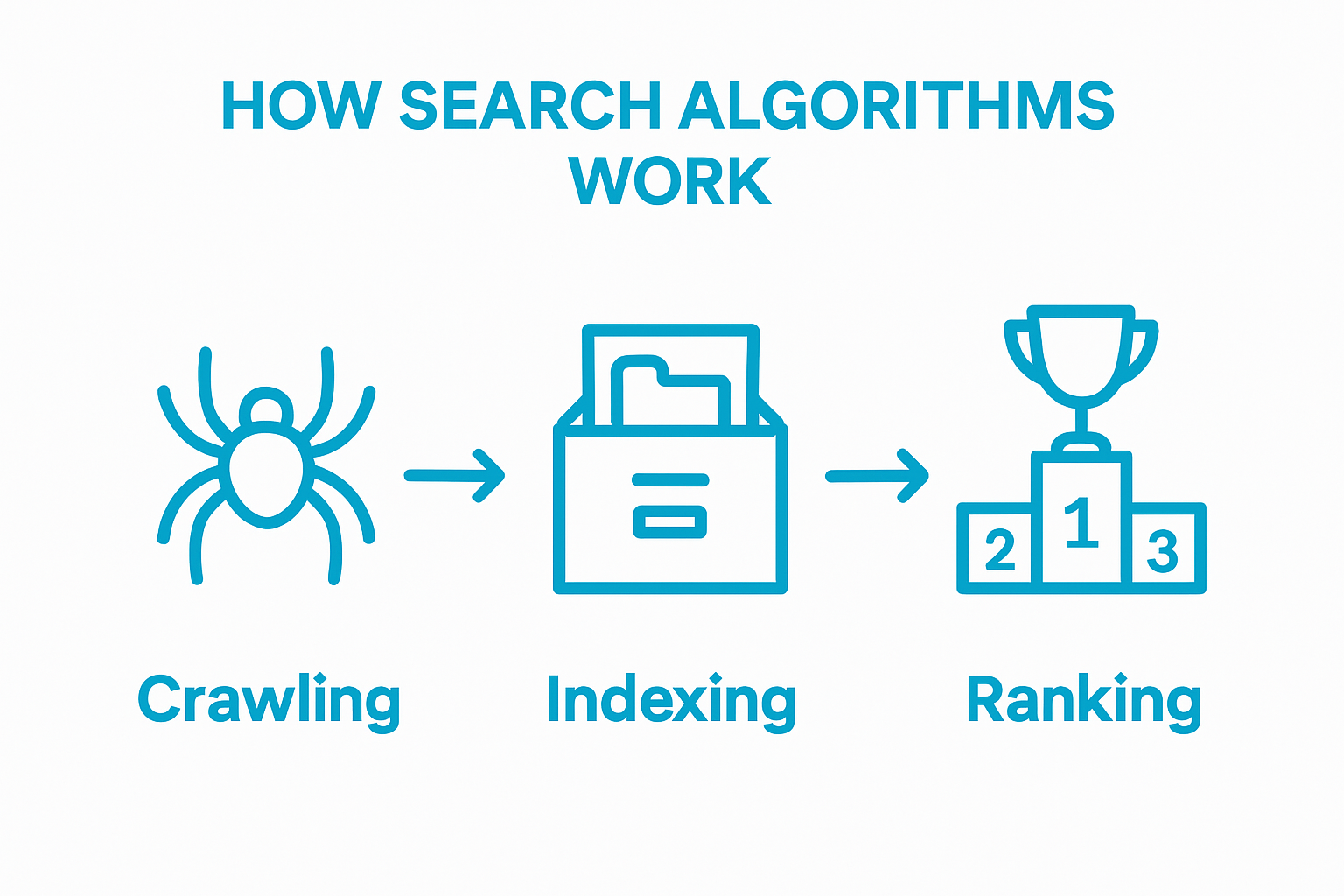
- Crawling: Web crawlers systematically browse and discover new web pages across the internet
- Indexing: Organizing and storing discovered web page information in massive digital databases
- Ranking: Evaluating and sorting web pages based on hundreds of ranking factors
Fundamental Ranking Factors
Search algorithms assess web pages using multiple sophisticated criteria to determine their relevance and quality. According to research from OpenStax, these factors typically include:
- Content relevance and keyword optimization
- Website authority and credibility
- User engagement metrics
- Page loading speed
- Mobile responsiveness
- Quality and quantity of external links
By continuously refining these computational processes, search algorithms aim to provide users with the most accurate, useful, and timely information possible. They represent a dynamic intersection of computer science, information retrieval, and machine learning technologies that adapt and improve with each search query processed.
To help clarify the essential stages that make up the search algorithm process, the following table breaks down each component and its main function.
| Stage | Description |
|---|---|
| Crawling | Web crawlers systematically browse the internet to discover new web pages |
| Indexing | Information from discovered web pages is organized and stored in large digital databases |
| Ranking | Pages are evaluated and sorted based on hundreds of factors to determine search result order |
Why Search Algorithms Matter for Online Visibility
Search algorithms are the invisible gatekeepers determining which websites gain exposure and which remain hidden in the digital landscape. For businesses and content creators, understanding these algorithms represents the difference between online success and digital obscurity.

The Critical Role of Algorithmic Visibility
Modern search algorithms do far more than simply matching keywords. Learn about semantic search strategies to understand the nuanced ways search engines evaluate content. These complex systems assess multiple dimensions of digital content to determine its relevance, credibility, and user value.
Key aspects of algorithmic visibility include:
- Organic Traffic Generation: Algorithms determine which sites appear in top search results
- Competitive Positioning: Higher search rankings directly correlate with increased website visibility
- User Experience Evaluation: Content quality and engagement metrics significantly impact ranking
Economic and Strategic Implications
According to research from Google’s support documentation, search algorithms fundamentally shape online economic opportunities. Websites that successfully align with algorithmic preferences can experience substantial benefits:
- Increased website traffic
- Enhanced brand credibility
- Higher conversion potential
- Improved market reach
- Reduced marketing acquisition costs
By comprehending and strategically adapting to search algorithms, organizations can transform their digital presence from invisible to influential. These computational systems are not static barriers but dynamic frameworks that reward intelligent, user-focused content strategies.
This table summarizes the fundamental types of factors that search algorithms evaluate to determine a website’s ranking potential and online visibility.
| Ranking Factor Category | Example Elements |
|---|---|
| Content Quality & Relevance | Content originality, optimization for relevant keywords |
| Website Authority & Credibility | Domain authority, reputation, trustworthiness |
| User Engagement Metrics | Time on page, click-through rate, interaction quality |
| Technical Performance | Page loading speed, mobile responsiveness, secure protocols |
| External Link Quality | Number and quality of inbound external links |
How Search Algorithms Analyze and Rank Content
Search algorithms conduct an intricate, multi-layered analysis of digital content to determine its relevance, quality, and ranking potential. This computational evaluation goes far beyond simple keyword matching, involving sophisticated techniques that assess the holistic value of web pages.
Content Analysis Mechanisms
Learn more about understanding search intent to comprehend the nuanced ways algorithms interpret digital content. The analysis process involves several critical evaluation stages that transform raw web pages into searchable, rankable information.
Key content analysis mechanisms include:
- Semantic Understanding: Evaluating contextual meaning beyond literal keywords
- Relevance Scoring: Matching content depth with user query expectations
- Quality Assessment: Analyzing content comprehensiveness and expertise
Ranking Factor Evaluation
According to research from Search.gov, search algorithms utilize complex scoring systems that consider multiple interconnected factors. These computational frameworks assess web pages through a dynamic set of criteria designed to surface the most valuable and trustworthy information.
Primary ranking factors encompass:
- Content originality and comprehensiveness
- Website domain authority
- User engagement metrics
- Technical performance indicators
- External link quality and quantity
By continuously refining these analytical processes, search algorithms create increasingly intelligent systems that can discern nuanced content quality. The goal is not just to match keywords but to understand user intent and deliver the most meaningful, contextually relevant information possible.
Key Factors Influencing Search Algorithm Performance
Search algorithm performance is a complex ecosystem of interconnected factors that determine how effectively digital content is discovered, evaluated, and ranked. Understanding these critical elements provides insight into the sophisticated mechanisms driving online visibility and search result relevance.
Content Quality and Relevance Signals
Explore technical SEO foundations to grasp how search algorithms assess content quality. The primary performance indicators extend far beyond traditional keyword matching, encompassing a comprehensive evaluation of digital content’s intrinsic and extrinsic characteristics.
Key content quality signals include:
- Semantic Depth: Analyzing contextual meaning and comprehensive topic coverage
- User Engagement Metrics: Measuring interaction quality and time spent on page
- Content Originality: Assessing unique insights and information value
Technical Performance and Structural Indicators
According to research from the UK Research and Innovation, search algorithms prioritize websites that demonstrate superior technical performance and structural integrity.
Critical technical performance factors encompass:
- Website loading speed
- Mobile responsiveness
- Secure connection protocols
- Clean, logical site architecture
- Efficient internal linking structure
By meticulously evaluating these multifaceted performance indicators, search algorithms create increasingly sophisticated systems designed to surface the most valuable, relevant, and trustworthy digital content for users worldwide.
The Evolution of Search Algorithms and Future Trends
Search algorithms have undergone a remarkable transformation from simplistic keyword matching to sophisticated, intelligent systems capable of understanding complex user intent and context. This evolutionary journey reflects the continuous advancement of computational intelligence and machine learning technologies.
Historical Progression of Search Technology
Discover the key milestones in search engine history to appreciate the remarkable technological leaps that have shaped modern search capabilities. The progression represents a dramatic shift from rudimentary indexing techniques to advanced, context-aware computational frameworks.
Significant developmental stages include:
- Keyword Matching Era: Basic text-based search strategies
- PageRank Revolution: Introduction of link-based relevance scoring
- Semantic Search Emergence: Context and intent interpretation
Emerging Technological Frontiers
According to research exploring future search technologies, search algorithms are rapidly incorporating artificial intelligence and machine learning to create more nuanced, predictive search experiences.
Key future technological trends encompass:
- Artificial Intelligence driven personalization
- Natural language processing improvements
- Advanced machine learning prediction models
- Enhanced contextual understanding capabilities
- Real-time adaptive search result generation
The trajectory of search algorithms suggests an increasingly intelligent, anticipatory system that goes beyond retrieving information to understanding user needs with remarkable precision and depth.
Ready to Stop Losing Rankings to Keyword Overlap?
After learning how search algorithms analyze content for relevance, authority, and user experience, you might be wondering why your SEO efforts are not resulting in higher rankings. The reality is that algorithmic factors like content depth and site structure can actually work against you if your pages unintentionally compete for the same keywords. This leads to a hidden challenge known as keyword cannibalization, which confuses search algorithms and holds your site back.

Imagine finally breaking out of the digital shadows by making every page of your website work together instead of against each other. Discover how the #1 Keyword Cannibalization Tool trusted by top SEO professionals can automatically uncover cannibalization issues and help you optimize for better search performance. Take control of your rankings and let RankAligner show you exactly where to fix your strategy. Act now and watch your site gain the visibility it deserves. Get your competitive SEO edge and start optimizing with RankAligner today.
Frequently Asked Questions
How do search algorithms determine the relevance of a website?
Search algorithms evaluate a website’s relevance using various factors such as content quality, keyword optimization, user engagement metrics, and site authority. These elements help algorithms match user queries with the most appropriate content.
What are the main components of a search algorithm?
The main components of a search algorithm include crawling, indexing, and ranking. Crawling involves discovering new web pages, indexing organizes and stores this information, and ranking evaluates pages based on predetermined factors to deliver search results.
Why is understanding search algorithms important for SEO?
Understanding search algorithms is crucial for SEO because it allows businesses to optimize their content to improve visibility in search results, attract organic traffic, and ultimately enhance their online presence and conversion rates.
How do technical factors influence search algorithm performance?
Technical factors such as loading speed, mobile responsiveness, secured connections, and clean site architecture significantly influence search algorithm performance. Websites that excel in these aspects are more likely to rank higher in search results.