

Every time you search on Google, you see more than just a list of blue links. SERP features like answer boxes, image packs, and local maps now fill up to 50 percent of results pages, pulling your attention with quick answers and visuals. You might think snagging a top spot in the rankings is your ticket to visibility, but the real power now lies in understanding and targeting these features if you want to get noticed.
Table of Contents
- What Are Serp Features And Why They Matter
- Key Types Of Serp Features To Know
- How Serp Features Impact Seo Strategy
- Optimizing Content For Serp Features
Quick Summary
| Takeaway | Explanation |
|---|---|
| SERP features enhance user experience | Modern search results include dynamic elements that provide quick, relevant answers to user queries without needing clicks. |
| Optimizing for SERP features is vital | To improve visibility, content must be tailored for various SERP features like Featured Snippets, Local Packs, and Knowledge Panels. |
| Understand user intent for content creation | Creating content that accurately anticipates and answers user questions is essential for gaining SERP feature placement. |
| Technical elements signal relevance | Implementing schema markup and ensuring mobile responsiveness can enhance the performance of content in search rankings. |
| High-quality content drives engagement | Comprehensive and authoritative content not only attracts users but also increases chances of appearing in various SERP formats. |
What Are SERP Features and Why They Matter
Search Engine Results Pages (SERPs) have evolved far beyond simple blue links and basic descriptions. Modern search experiences are rich, dynamic, and packed with information that helps users find exactly what they need quickly. SERP features represent these specialized elements that transform how information is presented and consumed online.
Understanding the SERP Feature Landscape
SERP features are sophisticated search result elements that provide users with immediate, targeted information without requiring them to click through to a website. Learn more about search optimization strategies that can help you leverage these powerful presentation formats.
According to Ahrefs, these features are algorithmically generated to enhance user experience and deliver precise information. Common SERP features include:
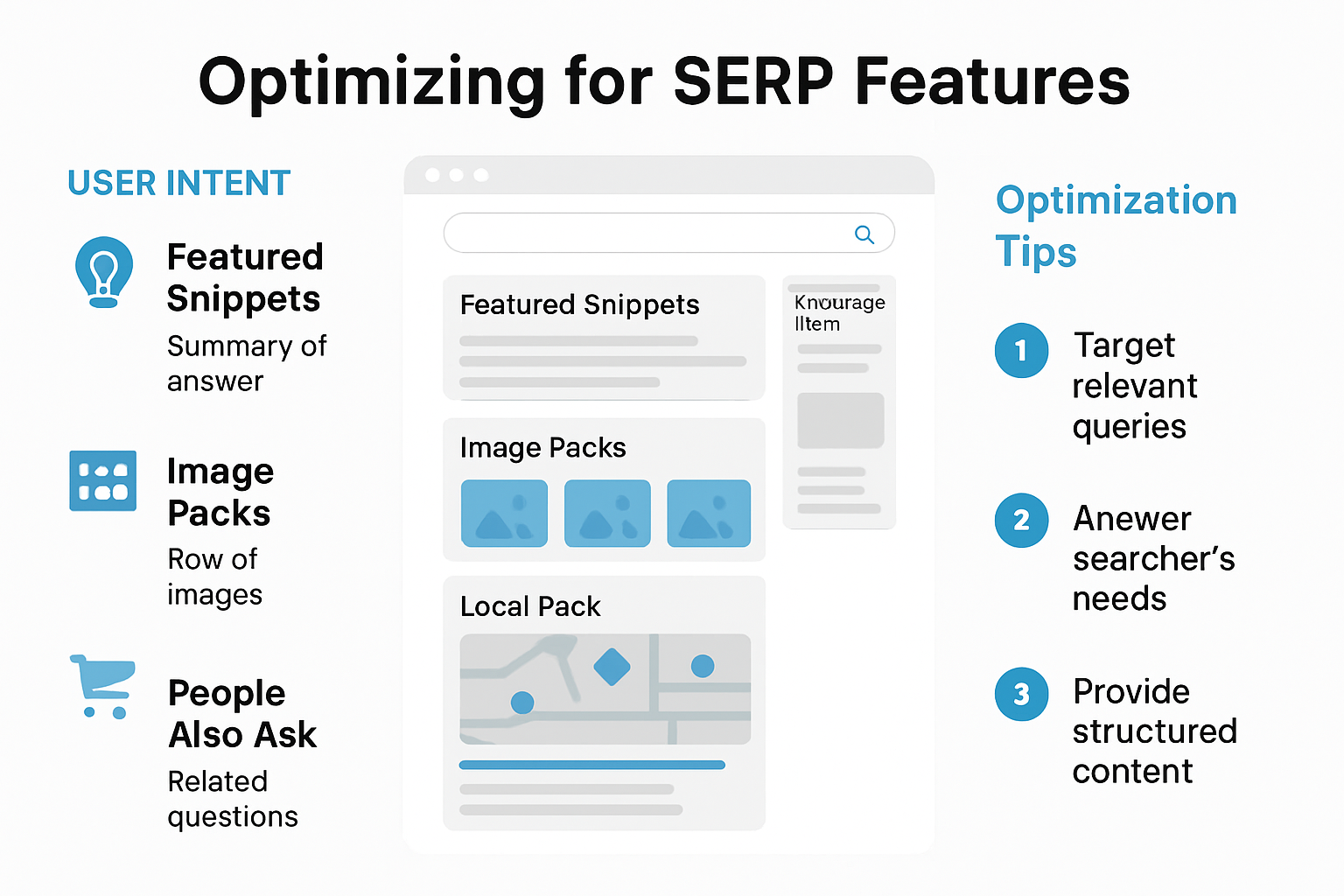
- Knowledge Panels: Comprehensive information boxes providing quick facts about entities
- Featured Snippets: Concise answer boxes that directly address search queries
- Image Packs: Visual search results displaying relevant images
- Local Packs: Geographically targeted business and location information
- People Also Ask boxes: Related questions that expand search context
The Strategic Importance of SERP Features
SERP features are not just visual enhancements. They represent a fundamental shift in how search engines connect users with information. HubSpot’s research indicates these features are designed to dramatically improve search relevance and user experience.
For businesses and content creators, SERP features offer unprecedented opportunities. They provide prime real estate on search results pages, allowing brands to capture user attention more effectively than traditional organic listings. By optimizing content for these features, websites can:
- Increase visibility and click-through rates
- Establish authority in specific topic areas
- Provide immediate value to potential visitors
- Stand out in increasingly competitive search landscapes
The strategic implementation of SERP feature optimization requires understanding user intent, creating high-quality content, and using structured data to signal relevance to search engines. WebFX emphasizes that these features are not just aesthetic improvements but critical components of modern search strategy.
As search technologies continue evolving, SERP features will become increasingly sophisticated. Businesses that adapt quickly and create content specifically designed to appear in these enhanced search results will gain significant competitive advantages in digital visibility and user engagement.
Key Types of SERP Features to Know
Search engine results pages are no longer simple lists of blue links. Today, they are complex landscapes of information designed to provide users with immediate, relevant answers. Discover advanced content optimization techniques that can help you navigate these evolving search environments.
Informational SERP Features
Informational SERP features are designed to quickly deliver precise answers and context to user queries. According to HubSpot, these features include:
- Featured Snippets: Concise answer boxes that appear at the top of search results, extracting direct answers from web pages
- Knowledge Panels: Comprehensive information boxes that provide quick facts about entities like people, places, and organizations
- People Also Ask boxes: Interactive sections that expand with related questions, helping users explore topics more deeply
Ahrefs highlights that these features aim to reduce user friction by presenting information immediately, without requiring additional clicks.
Visual and Multimedia SERP Features
Visual SERP features transform search results from text-based to rich, engaging experiences. WebFX notes that these features include:
- Image Packs: Horizontal or grid-based image results that provide visual context for search queries
- Video Thumbnails: Clickable video previews that offer immediate visual content
- Top Stories: News and current event results with headlines, images, and publication information
These multimedia features cater to users who prefer visual information and want quick insights into topics.
Transactional and Local SERP Features
For users with commercial or location-specific intent, search engines offer specialized features. According to Mailchimp, these include:
- Local Packs: Geographically targeted results showing nearby businesses, complete with maps, contact information, and reviews
- Shopping Results: Product listings with images, prices, and merchant information
- Rich Snippets: Enhanced organic listings that include additional details like star ratings, pricing, and availability
These features are crucial for businesses looking to attract local customers or drive online sales. They provide immediate, actionable information that helps users make quick decisions.

Understanding and optimizing for these diverse SERP features is no longer optional—it’s a critical component of modern SEO strategy. By creating high-quality, structured content that signals relevance to search engines, businesses can increase their visibility and attract more targeted traffic.
To help clarify the differences between various SERP features, the following table summarizes their types, purposes, and examples as described in the article.
| SERP Feature Type | Purpose | Common Examples |
|---|---|---|
| Informational | Deliver answers and context quickly | Featured Snippets, Knowledge Panels, People Also Ask |
| Visual and Multimedia | Provide visual or multimedia search experiences | Image Packs, Video Thumbnails, Top Stories |
| Transactional and Local | Connect users to commercial or location data | Local Packs, Shopping Results, Rich Snippets |
How SERP Features Impact SEO Strategy
SERP features have fundamentally transformed the landscape of search engine optimization, creating new challenges and opportunities for digital marketers and content creators. Discover advanced optimization techniques that can help you navigate these complex search environments.
Changing User Interaction Dynamics
The emergence of diverse SERP features has dramatically altered how users interact with search results. According to a groundbreaking research study from arxiv.org, the presence of various SERP features can significantly modulate web traffic, either amplifying or attenuating organic click-through rates. This means that traditional SEO strategies focused solely on achieving top organic rankings are no longer sufficient.
Researchers analyzing 67,000 keywords across multiple domains discovered that SERP features create a more complex user engagement landscape. Users now have multiple interaction points within search results, including:
- Extracting immediate answers from Featured Snippets
- Exploring related questions in ‘People Also Ask’ boxes
- Viewing visual content without clicking through to websites
- Accessing local business information directly from search results
Content Optimization for SERP Visibility
Research from another academic study emphasizes that SEO metrics now extend beyond traditional ranking factors. Content creators must now optimize for:
- Structured data implementation
- Clear, concise answer formatting
- Semantic markup that helps search engines understand content context
- Multimedia elements that enhance information presentation
The goal has shifted from simply ranking high to becoming the most relevant and immediately useful source of information for specific queries. This requires a more nuanced approach to content creation that anticipates user intent and provides comprehensive, structured information.
Competitive Advantage Through Strategic Adaptation
A fascinating academic paper on search engine result page evaluation proposes a model that captures user behavior by considering clicks, attention, and satisfaction. This research underscores a critical point: businesses that quickly adapt their content strategies to align with SERP feature requirements will gain significant competitive advantages.
Strategic considerations now include:
- Developing content that can be featured in snippets
- Creating comprehensive, authoritative content
- Implementing schema markup
- Understanding and targeting user intent more precisely
- Producing content that answers questions directly and comprehensively
The evolution of SERP features represents more than a technical challenge—it’s a fundamental shift in how information is discovered, consumed, and valued online. SEO professionals must now think beyond traditional ranking metrics and focus on creating content that provides immediate, contextual value to users.
Ultimately, success in this new SEO landscape requires a holistic approach that combines technical optimization, high-quality content creation, and a deep understanding of user search behaviors. Those who can effectively navigate these complex SERP features will be best positioned to capture user attention and drive meaningful digital engagement.
Optimizing Content for SERP Features
Optimizing content for SERP features requires a strategic approach that goes beyond traditional SEO techniques. Learn advanced content optimization techniques to enhance your search visibility and capture user attention effectively.
Structuring Content for Featured Snippets
To maximize the potential of appearing in Featured Snippets, content must be meticulously structured and highly informative. Research from Carnegie Mellon University emphasizes the critical importance of precise keyword research and natural incorporation of relevant terms.
Key strategies for Featured Snippet optimization include:
Below is a summary table of key strategies for optimizing content to appear in Featured Snippets, as detailed in the corresponding article section.
| Strategy | Description |
|---|---|
| Answer Format | Create clear, concise answers to specific questions |
| Structured Formatting | Use headers, bullet points, and numbered lists |
| Comprehensive Coverage | Provide in-depth information that thoroughly addresses user queries |
| Keyword Targeting | Include precise search terms and semantic variations |
- Answer Format: Create clear, concise answers to specific questions
- Structured Formatting: Use headers, bullet points, and numbered lists
- Comprehensive Coverage: Provide in-depth information that thoroughly addresses user queries
- Keyword Targeting: Include precise search terms and semantic variations
According to academic research, websites that implement these strategies can significantly improve their chances of being selected for Featured Snippets, which can dramatically increase organic visibility and click-through rates.
Technical Optimization and Schema Markup
Technical elements play a crucial role in SERP feature optimization. MDPI research highlights that high-quality content combined with proper technical implementation is essential for achieving prominent search engine rankings.
Critical technical optimization techniques include:
- Schema Markup: Implement structured data to help search engines understand content context
- Semantic HTML: Use appropriate heading tags and semantic HTML elements
- Mobile Responsiveness: Ensure content displays correctly across all devices
- Page Speed: Optimize loading times to improve user experience
These technical elements signal to search engines the relevance and quality of your content, increasing the likelihood of appearing in various SERP features.
Content Quality and User Intent
Ultimately, SERP feature optimization revolves around understanding and addressing user intent with exceptional content. This means creating resources that not only answer specific questions but provide comprehensive, authoritative information.
Strategies for meeting user intent include:
- Conducting thorough keyword and user intent research
- Creating content that anticipates and answers follow-up questions
- Developing comprehensive, multimedia-rich resources
- Regularly updating content to maintain relevance
By focusing on delivering genuine value to users, content creators can improve their chances of being featured in various SERP elements while simultaneously building credibility and authority in their respective domains.
The landscape of search engine optimization continues to evolve, and success depends on a holistic approach that combines technical expertise, strategic content creation, and a deep understanding of user behavior. Those who can effectively optimize for SERP features will gain a significant competitive advantage in the digital marketplace.
Frequently Asked Questions
What are SERP features?
SERP features are specialized elements in search engine results pages that provide users with quick, relevant information without needing to click through to websites. They include elements like Featured Snippets, Knowledge Panels, and Local Packs.
Why are SERP features important for SEO?
SERP features are crucial for SEO because they enhance user experience, improve visibility, and increase click-through rates. They provide opportunities for brands to capture user attention more effectively and establish authority in specific topic areas.
How can I optimize my content for SERP features?
To optimize content for SERP features, focus on clear and concise answers to user queries, structured formatting with headers and bullet points, and implementing schema markup to help search engines understand your content better.
What types of SERP features should I be aware of?
Key SERP features to be aware of include informational features like Featured Snippets and Knowledge Panels, visual features like Image Packs, and transactional features such as Local Packs and Shopping Results.
Ready to Transform Your Approach to SERP Features?
Struggling to keep your website visible when Google fills results with Featured Snippets and Knowledge Panels? You are not alone. The article “SERP Features Explained: Guide for SEO Success” highlights how modern search results are crowded with competitive SERP features. These new elements steal clicks away from traditional organic listings. When your content overlaps and confuses Google about which page to show, keyword cannibalization can quietly eat away at your rankings. This hurts your ability to win valuable spots in coveted SERP features.
Take control of your SERP presence right now. The RankAligner Keyword Cannibalization Tool is built for professionals who want to spot problems fast and fix them for good. Discover hidden conflicts between your pages and see how to fine-tune your SEO to stand out in Featured Snippets, Local Packs, and more. If you want to boost your rankings with clarity and authority, start by exploring how RankAligner helps you streamline your content strategy. Don’t let complexity hold you back. Make today the day you unlock your site’s real potential. Visit RankAligner.com and see what precise optimization feels like.
Recommended
- The Final Guide to Content Cannibalization in SEO (& How to Avoid)
- 15 Winning Hacks to Avoid Keyword Cannibalization Like a Pro
- 10 Keyword Cannibalization Mistakes That Are Killing Your SEO
- Rank Aligner – Your Ultimate Keyword Cannibalization Problem Solver
- SEO Meets CRO: Testing Solutions That Boost Rankings
- Why An SSL Certificate is Important for Client Trust and Google Rankings | Effortlessly Professional Websites